
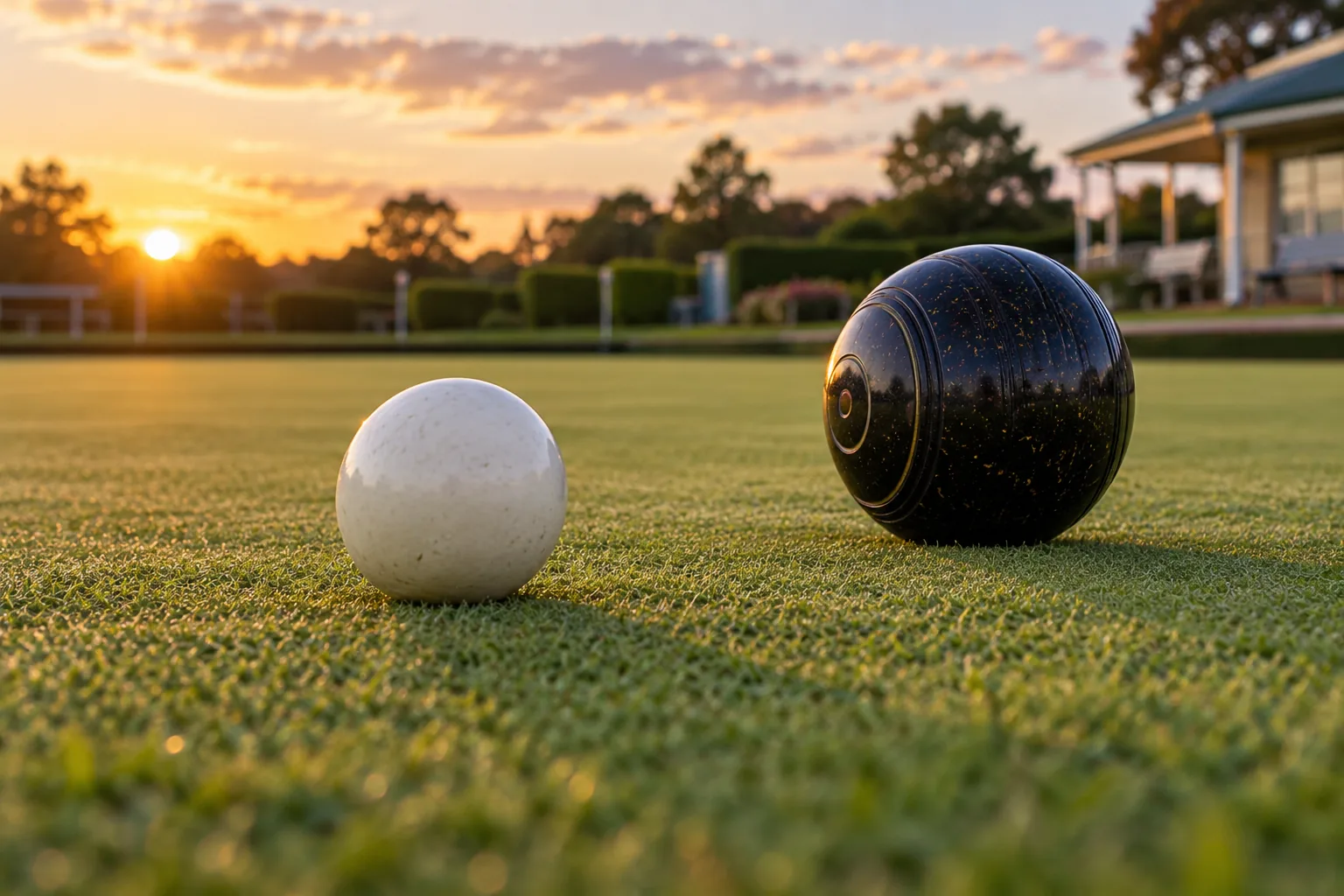
A bowl is jack-high when it has travelled roughly the same length as the jack, even if it finishes to one side. It is a useful description of weight, not an award of the shot. Distance to the jack still decides the score.
Length and line are separate
Imagine a bowl that stops beside the jack but one metre to the right. It has good length and poor line. A second bowl that stops short but directly in front may actually be closer. Saying “jack-high” describes the first bowl’s length; a measure settles which bowl scores.
Why the position helps
A jack-high bowl may block a later route, offer a useful target for a controlled on-shot or protect against a shifted jack. Its value depends on the shape of the head. The same bowl might be helpful early and obstruct your own draw later. Ask what it can do before calling it a good bowl.
Use it as delivery feedback
If your bowl finished jack-high but wide, keep the weight cue for the next similar draw and adjust the line. If it finished on line but short, keep the line and change the weight. This one-variable correction makes practice more meaningful than simply labeling a delivery good or bad.
A simple drill
Place a jack at a legal medium length and set a small target zone level with it on either side. Deliver eight bowls and record how many reach jack height, then how many finish close enough to threaten the shot. The two counts show whether weight or line needs more work.
Sources: Bowls Australia coaching activities, Bowls North West drills.
For a clearer look at a close club head, explore WGTS on iPhone or Android. Follow your competition's official measuring procedure for the result.