
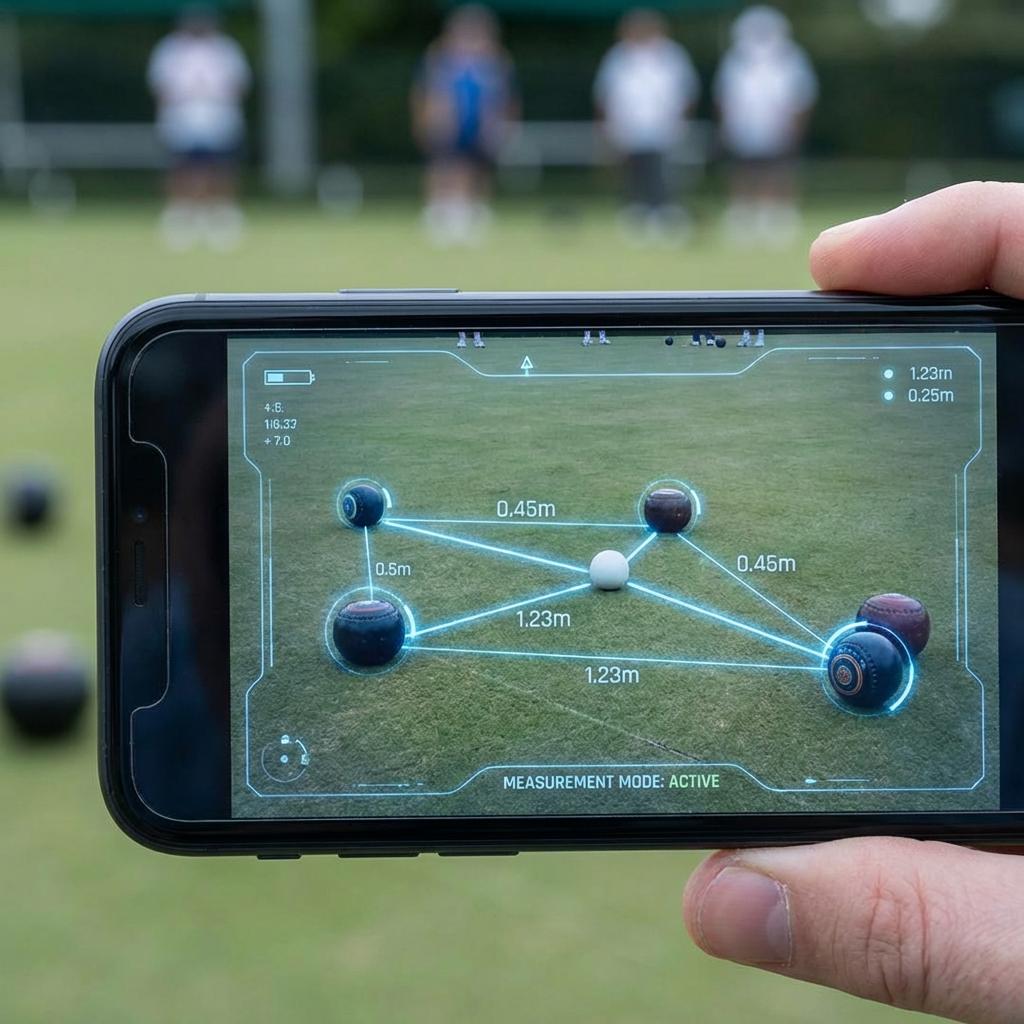
A close head is one of bowls’ best little pieces of theatre. Everyone leans in. Two bowls look impossibly level. Opinions arrive before the measure does. This is exactly when a calm routine matters most.
Look, agree, then measure
Start with the obvious shots. If both sides agree which bowls count, remove only those agreed bowls and keep them safely away from the head. Do not move a bowl that is still in question. The World Bowls Laws say the scoring process begins only after the final required bowl has come to rest, with an optional 30-second wait when requested for a leaning bowl. Measuring before that process begins is not allowed.
Once a measure is needed, work from the nearest point of the jack to the nearest point of the bowl. That sounds simple, but it prevents a common mistake: measuring from the centre or from whichever edge is easiest to reach.
Make the smallest movement possible
- Approach the head from a stable position and keep hands, feet and clothing clear.
- Use the right tool for the gap: a flexible or box measure for normal distances, callipers or feeler gauges for tiny gaps, and a string measure where the ditch makes a straight tool impractical.
- Set one end gently, bring the other end to the target, and read the result without dragging equipment through the head.
- If the equipment moves a bowl or jack, stop. The Laws set out who must replace it and how the decision is made.
Know when to call the umpire
A friendly roll-up can often be settled by agreement. In competition, a disputed shot belongs with the appointed umpire and suitable measuring equipment. The umpire’s decision is final under the Laws. Your competition’s domestic regulations and Conditions of Play also matter, so keep the current documents close.
The best measurement is not the fastest one. It is the one both teams can watch, understand and trust.
Further reading: World Bowls Laws of the Sport and Crystal Mark Fourth Edition.