
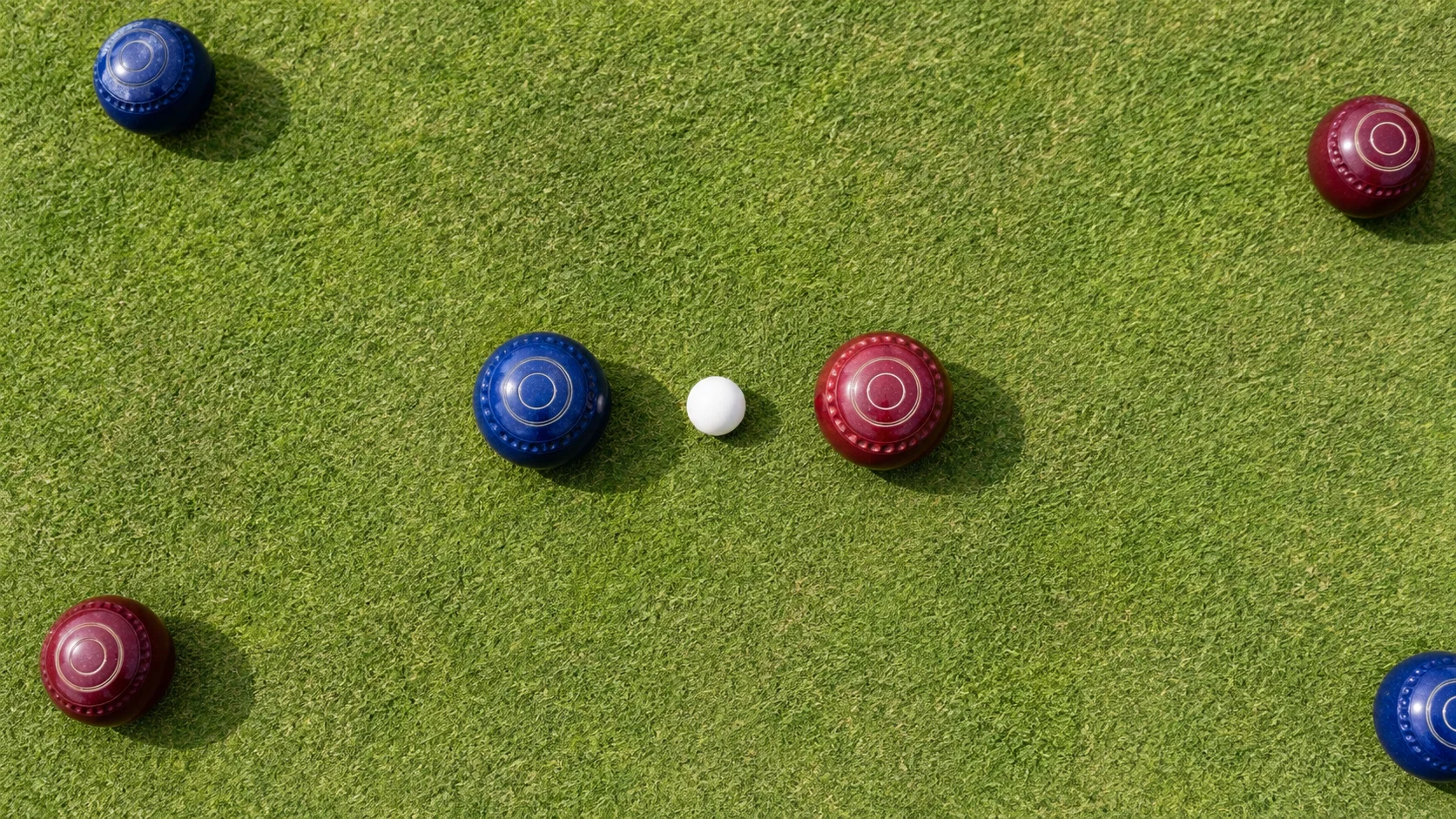
When the two closest bowls finish exactly the same distance from the jack, neither side receives a shot. The end is tied, recorded as a completed end and play continues. That sounds simple, but tied ends are often confused with dead ends and drawn games.
When is an end tied?
Under the World Bowls laws, no shot is scored by either side when the opponents agree that one of these situations applies:
each side’s nearest bowl is touching the jack;
each side’s nearest bowl is the same distance from the jack; or
no live bowls remain within the boundaries of the rink.
Do not move anything until the result is agreed. If sight alone cannot separate the bowls, use an appropriate measure. In singles, a marker can measure when asked; if the players are not satisfied, the umpire or a competent neutral person makes the final decision.
Does a tied end count?
Yes. It is entered on the scorecard as a completed end with no shots to either side. That is different from a dead end, which is not counted and is normally replayed.
Who starts after a tied end?
After a normal tied end, the right to place the mat and deliver the jack still follows the winner of the previous scoring end. A special rule applies if the first end is tied: the player or team that started the first end also starts the second.
Tied end, dead end and drawn game
Tied end: the end is complete, neither side scores, and the end counts.
Dead end: the end does not count and is replayed, unless event rules use a jack re-spot procedure.
Drawn game: the total match scores are equal after the scheduled format. A knockout may require one or more extra ends.
How to handle a “too close to call” head
Wait until the last bowl has stopped. If requested, allow the 30-second settling period.
Agree obvious shots first, without disturbing the head.
Measure between the nearest points of the jack and each bowl.
If the result remains equal, record a tied end rather than forcing a winner.
A phone view can help everyone understand why the call is close. WGTS ranks detected bowls and shows edge-to-edge distances on compatible devices, making it useful as a quick visual aid. It does not replace the official measure or umpire when your competition requires one.
Take a clearer view onto the green
WGTS brings camera-assisted bowl measurement and digital scorecards to your phone. Use it as a decision-support tool for social play and practice; for competition decisions, follow your club and event rules and call the umpire or use an official measure whenever required.
Download WGTS for iPhone or get WGTS on Google Play.
Rules note: this guide is based on the World Bowls Laws of the Sport, Crystal Mark Fourth Edition. Domestic regulations and a competition’s Conditions of Play can add to or vary some procedures. Check the rules for your event.