
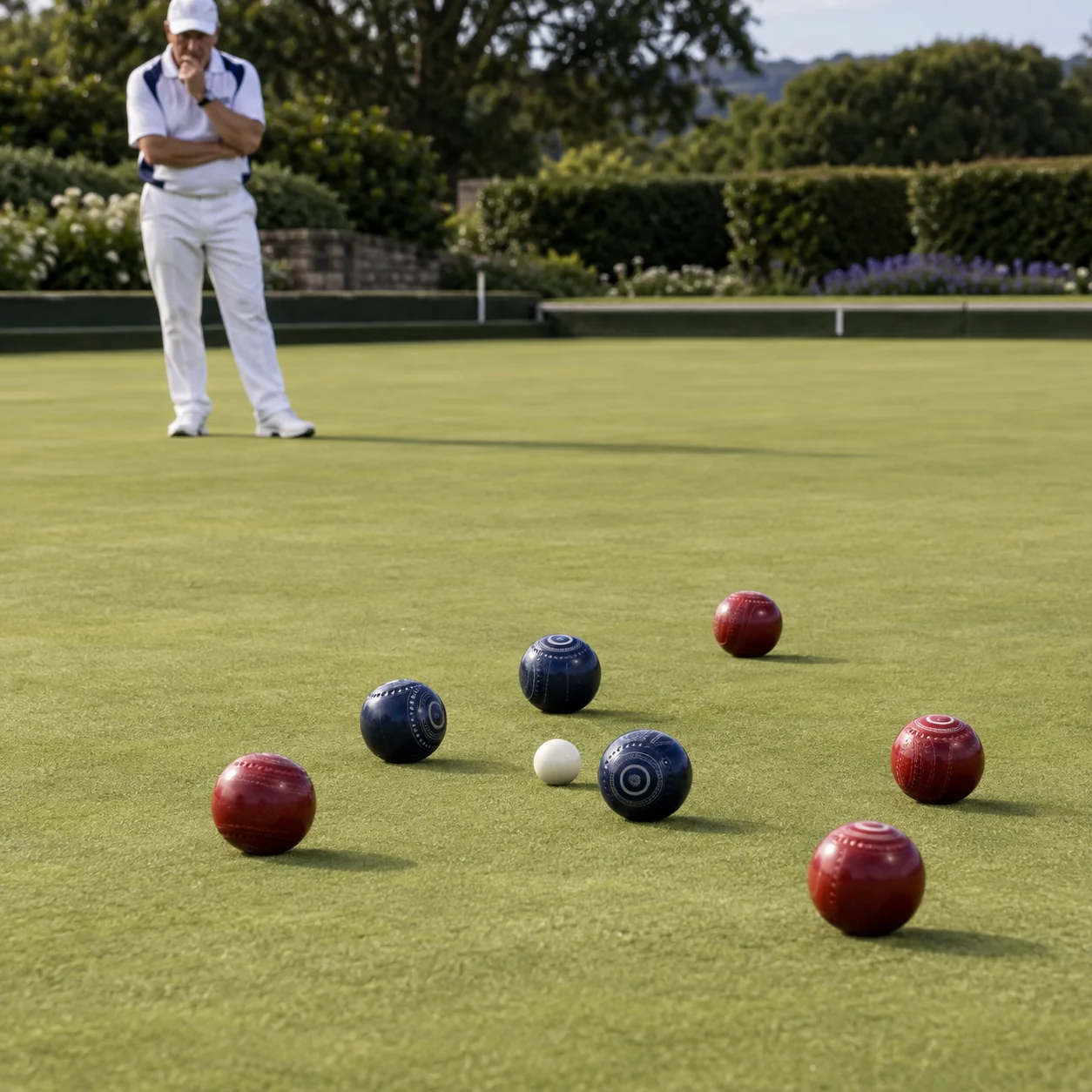
Good lawn bowls singles strategy is not about attacking every end. It is about making your opponent solve a difficult problem repeatedly: a reliable draw near the jack, useful bowls behind it and very few easy targets.
Start with a jack length you understand
When you control the mat, choose a legal length that suits your delivery and asks a question of your opponent. Change length with a reason—not simply because the previous end was lost.
Win the first-bowl contest
A dependable opening draw narrows the opponent's options. Practise putting the first bowl in a useful scoring or receiving position. Even when it is not shot, it can shape the safest route into the head.
Build position before chasing perfection
A bowl slightly behind the jack can protect against movement and become shot if the jack changes. Repeated short bowls rarely improve. Ask what your miss will do before choosing the delivery.
Know when one down is a good result
If the opponent owns the head, reducing three shots to one can be the best percentage play. A low-risk draw may create more match value than a drive that could turn a difficult end into a large loss.
Use the scoreboard
Score, ends remaining and who controls the mat should change your risk. A player protecting a lead can prefer stable position; a player running out of ends may need to create movement. Keep the running total visible so tactics come from the match, not emotion.
Read the head from both directions
- Which bowl is shot?
- Where is the best back position?
- What route remains open?
- What happens if the jack moves?
- Can the opponent use your short bowl?
Use evidence, then commit
Once you choose line and weight, deliver without a last-second steering correction. After the bowl stops, learn from its whole path. WGTS can help by keeping a Singles scorecard and giving both players a shared camera view of a close head on compatible phones.
Download WGTS for iPhone or WGTS for Android.