
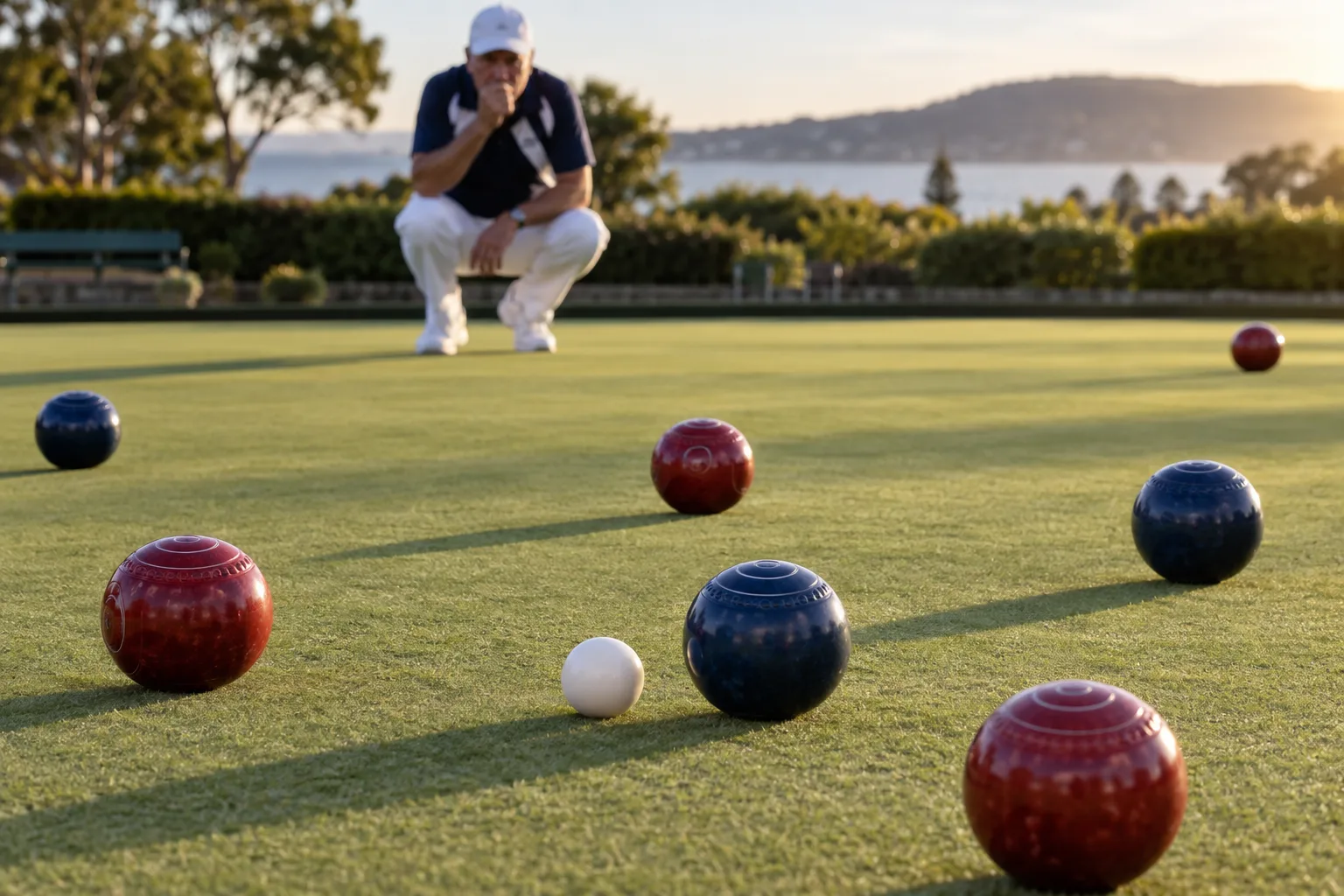
The right lawn bowls shot is not always the most dramatic one. Good selection begins with the score, the head and the safest useful result.
The draw shot
A draw is delivered with the weight needed to finish at a chosen point, often close to the jack. It is the foundation of the sport because accurate draw weight can score, defend or build the head without relying on contact.
Choose it when: the route is open, another bowl near the jack improves your position, or a miss on the intended side remains useful.
The yard-on shot
A yard-on uses more weight than a draw—enough to move a bowl or the jack while retaining a controlled finish. The extra speed reduces the amount of time the bias has to act, so the aiming line changes.
Choose it when: a small movement could turn the head, your bowl can take the place of the target, or a draw route is partly blocked.
The running shot
A running shot is firmer again. It aims to disturb the head, remove a bowl or move the jack with purposeful weight. Accuracy becomes harder because both line and rebound matter.
Choose it when: controlled contact offers a clear gain and the likely result of a near miss is acceptable.
The drive
A drive is a high-speed attacking shot intended to remove bowls, move the jack decisively or break up a dangerous head. The bowl takes a straighter line at speed, but the consequences are less predictable.
Choose it when: the potential loss is already high, a precise target is visible, and safer options do not solve the problem. Follow club safety practices and warn players when a firing shot is about to be played.
Useful variations
Rest: draw to a bowl and finish against it.
Trail: contact the jack with controlled weight and carry it towards your bowls.
Promotion: move one of your own bowls into a better position.
Guard: deliberately finish short to block an opponent’s route.
Wrest: remove an opponent’s bowl while trying to keep yours in the head.
A simple shot-selection checklist
Confirm the score and how many bowls remain.
Identify the current shot bowl and danger area.
Ask what a successful shot gains.
Ask what a narrow miss leaves behind.
Choose the lowest-risk shot that improves the head.
If you are holding shot, another draw or guard may be more valuable than attacking. If you are several down with one bowl left, controlled weight or a drive may be justified. The same head can demand different choices depending on the scoreboard.
Decide the result you need before deciding how hard to bowl.