
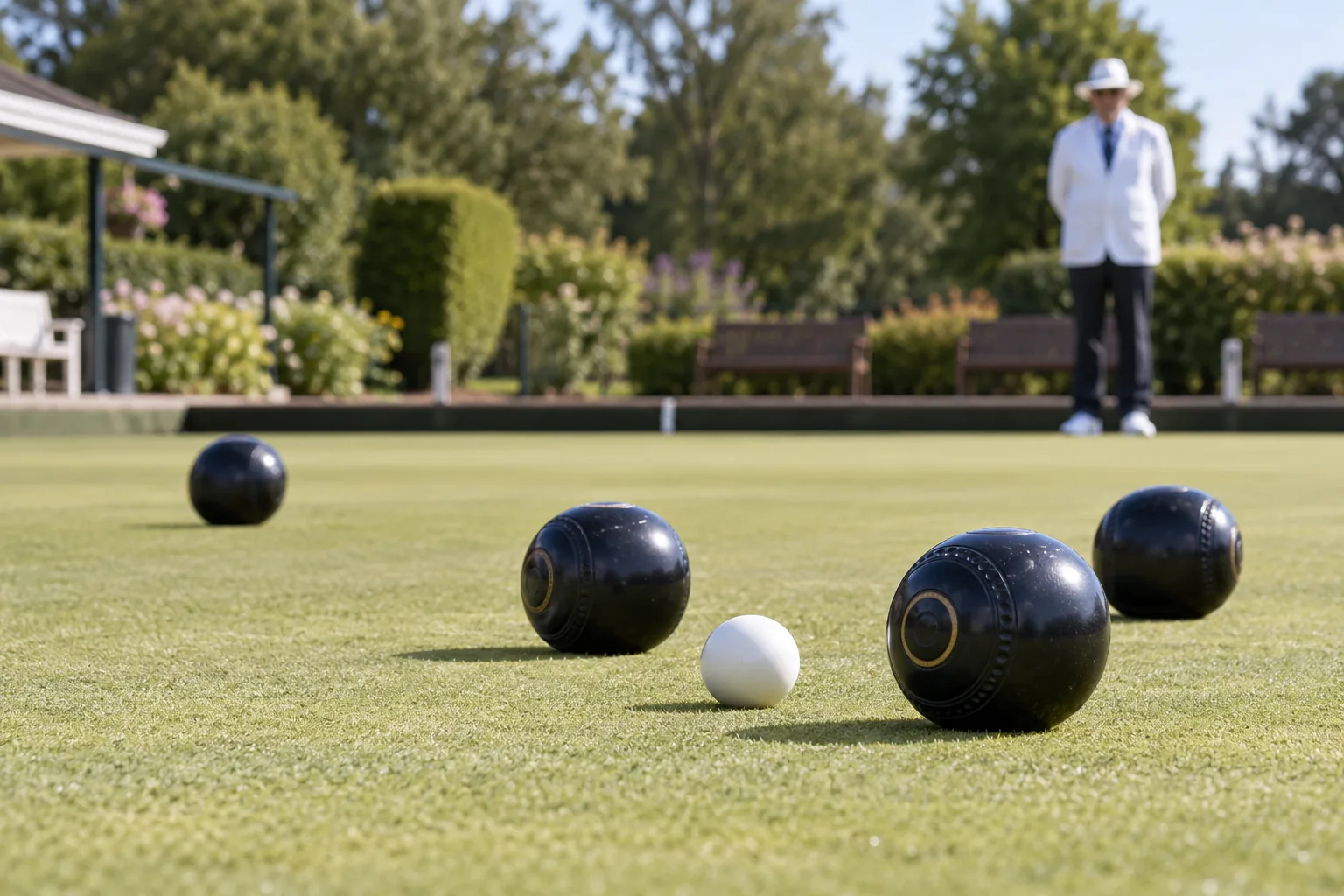
A jack leaving the rink can make an end dead under the standard laws, but some competitions use a re-spot rule. The key question is what the controlling body adopted for that event. Do not re-spot a jack merely because a player expects it.
First decide whether the jack is dead
World Bowls law 19 describes a dead jack. Examples include passing completely outside a side boundary or above the bank face. Players should stop and agree the facts, or ask the umpire if needed. A jack resting in a permitted part of the ditch is a different situation.
What re-spotting changes
When the competition has adopted the re-spot provision, law 56.5 says the end continues after the dead jack is placed at the applicable marked spot. The law permits three positions or a single central position. The exact location depends on how the jack left play and the option the controlling body chose.
A practical on-green sequence
Leave the bowls where they are. Confirm the jack is dead, check the event conditions, identify the correct marked spot and place the jack as the law specifies. If a bowl covers the spot, follow the law’s closest-possible placement procedure instead of moving that bowl to clear it. Then resume play with the remaining bowls.
When the provision is not in force
A dead end is replayed under the normal dead-end procedure. The player who started that end starts the replay. Conditions of play can add event detail, so the team sheet or rules notice should be available before the match. For a disputed placement, call the umpire before moving the head.
Sources: World Bowls Crystal Mark Fourth Edition, World Bowls laws page.
For a clearer look at a close club head, explore WGTS on iPhone or Android. Follow your competition's official measuring procedure for the result.