
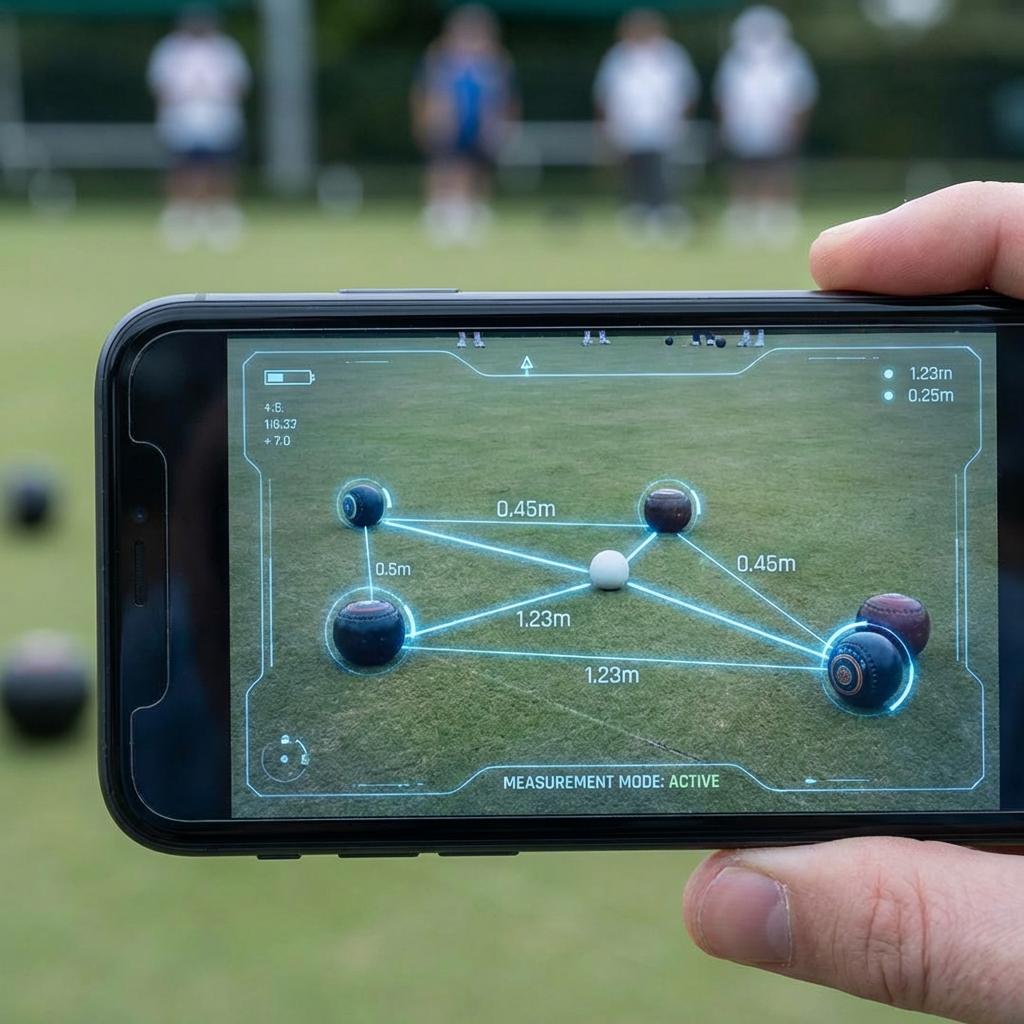
Rolling forty bowls at a jack can feel productive. It can also hide what you are actually learning. Purposeful practice gives every delivery a job, records the result and changes one variable at a time.
Drill one: the draw ladder
Place targets at three lengths—short, medium and long. Deliver four bowls to each, then repeat in reverse order. Score one point for finishing within a mat length and two for finishing within a bowl-and-a-half. The target is not a perfect bowl; it is consistent adjustment between lengths.
Drill two: two hands, one zone
Create a scoring zone around the jack. Deliver four forehands and four backhands with the same intended weight. Record where each bowl crosses the head and where it stops. This separates a line problem from a weight problem and reveals which hand is more dependable today.
Drill three: jack-high or behind
Divide the target area into three bands: short, jack-high and one metre behind. Award no point for short, one for jack-high and two for the useful back position. This encourages positive weight without turning every delivery into a drive.
Use a tiny practice log
- Date, surface and approximate conditions.
- Drill and target length.
- Score or landing pattern.
- One cue that helped.
- One adjustment for next time.
Do not rebuild your action after every miss. Use groups of four bowls, review the pattern, then choose one change. If three bowls finish together but wide, your weight may be excellent and your line needs attention. If they share a line but finish at different lengths, protect the line and work on tempo.
Finish under light pressure
End with a challenge that must be completed before you leave: perhaps three of four bowls inside a scoring zone. Pressure exposes your routine without needing a full match.
Consistency is not born from repeating the same mistake more enthusiastically. It grows when practice asks a clear question—and every bowl gives you an answer.
Further reading: World Bowls: The Sport of Bowls and Bowls Australia Learn to Bowl.