
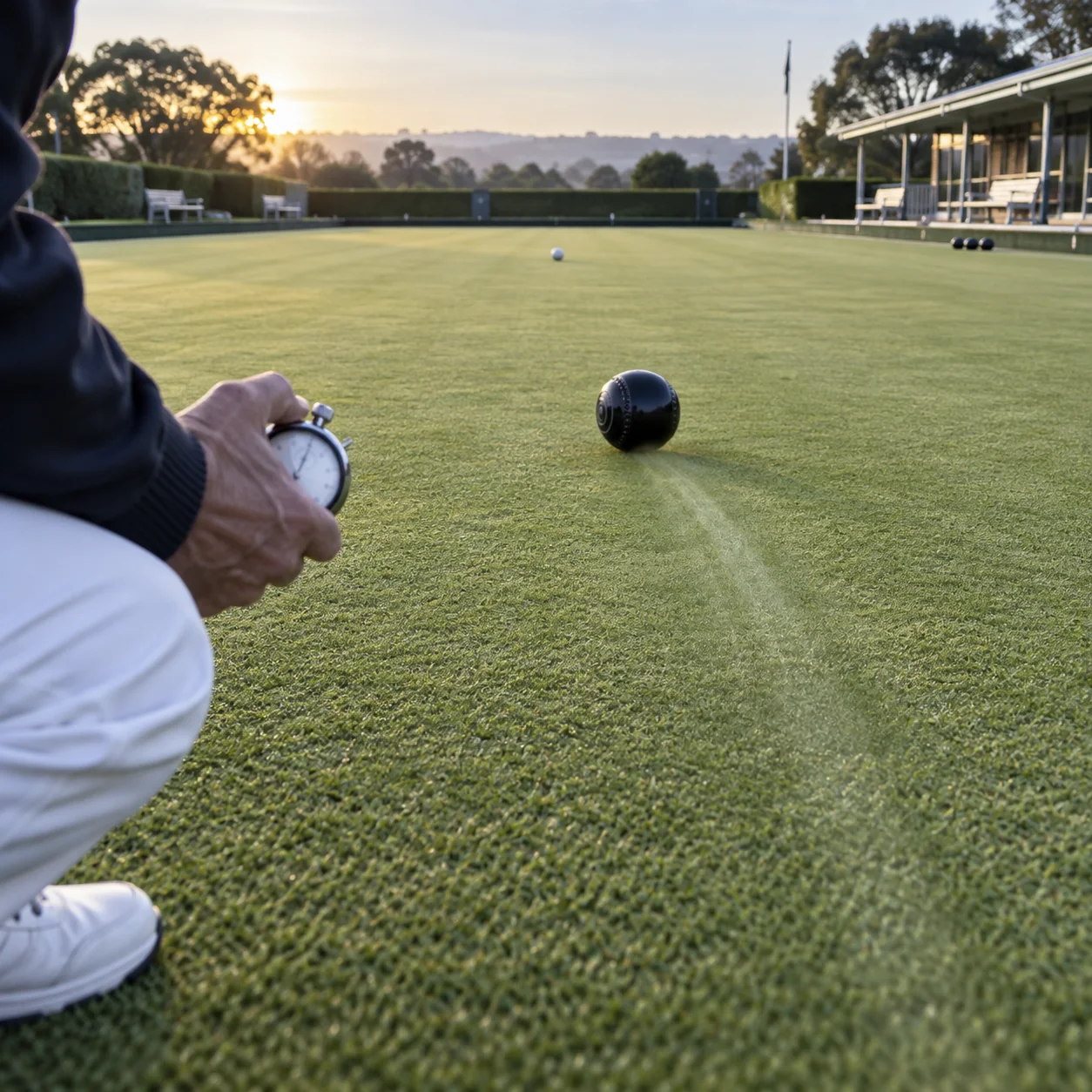
The pace of a bowling green is the time a bowl takes to travel from delivery to rest at a standard long distance. In bowls language, a higher time means a faster green: the bowl needs less delivery force to travel the same length and usually has more time to turn.
Why is a faster green measured with more seconds?
World Bowls defines pace as the number of seconds a bowl takes to come to rest at about 27 metres from the mat line. On a quick surface, a gently delivered bowl keeps rolling for longer, so the stopwatch records more seconds.
What changes the pace?
- Grass type, cut height and moisture
- Synthetic surface condition and temperature
- Rain, dew, wind and shade
- Wear along common delivery lines
- Time of day and maintenance
The two hands can also feel different. One side of the rink may hold, run or turn more than the other.
How to adjust on a faster green
Use a smaller, smoother delivery rather than steering the bowl. Expect the bowl to take more bias as it slows. Heavy correction often creates a second error, so change one variable at a time and watch the full path.
How to adjust on a slower green
Add controlled weight while keeping the same balanced step and low release. Avoid forcing the arm or dropping the bowl from higher up. More effort should not mean a different delivery shape.
A three-bowl pace check
- Deliver one draw to a medium jack on your preferred hand.
- Repeat the same line with slightly less or more weight based on the finish.
- Play the third bowl on the opposite hand and compare the turn.
Note the result, then repeat in the other direction. Conditions can change during a match, so treat pace as live information rather than a number you learned before play.
Keep the evidence from each end
WGTS scorecards preserve the match context, and its camera-assisted view can help the group compare the final head on compatible devices. Get WGTS for iPhone or WGTS for Android.