
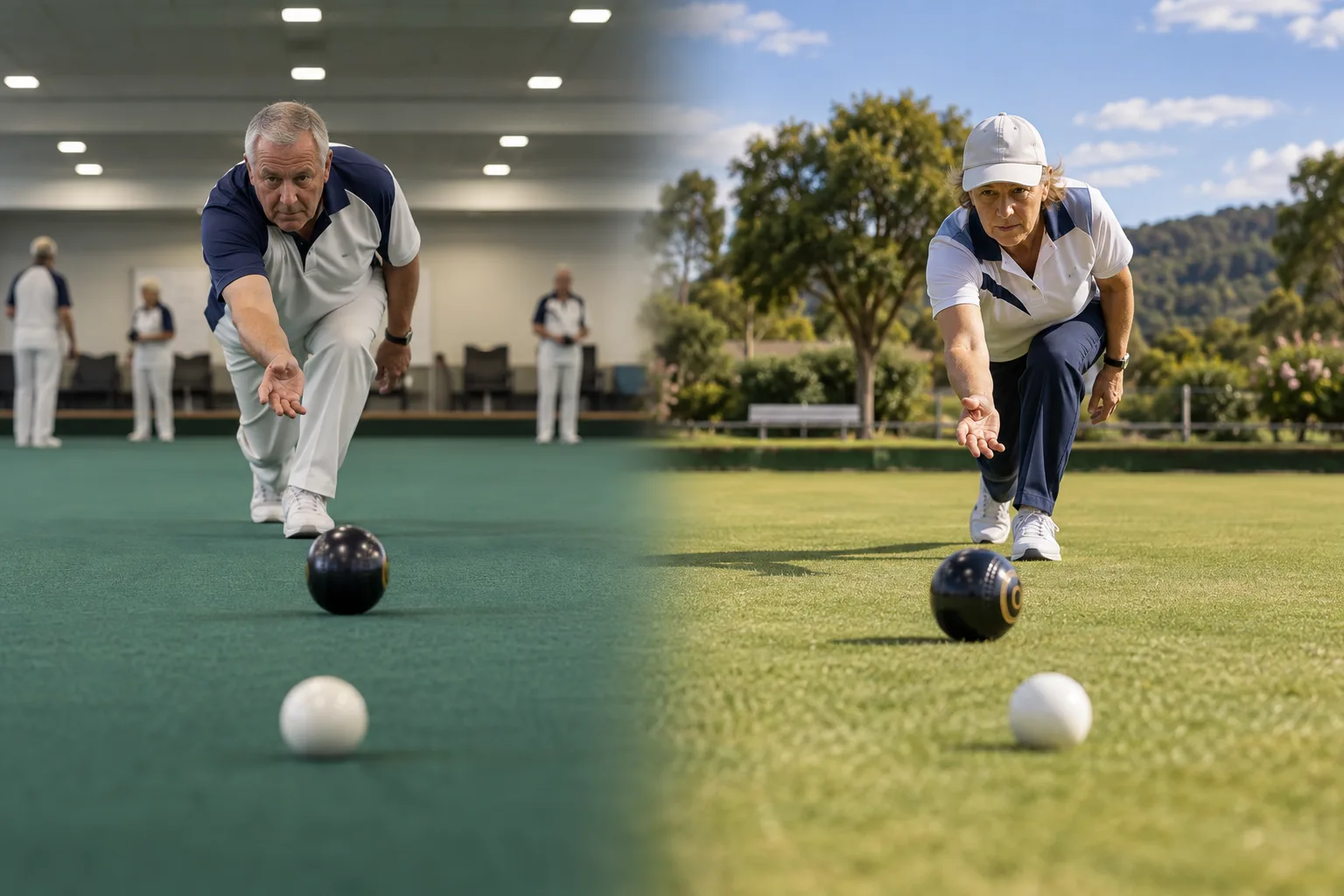
Indoor and outdoor lawn bowls share the same central challenge: control a biased bowl and finish closer to the jack. The surface changes how that challenge feels.
The biggest difference is the surface
Indoor bowls is generally played on a consistent carpet-like rink. Outdoor bowls may use natural grass or an approved synthetic surface. Natural greens respond to moisture, temperature, wear and maintenance, so pace can change from one day—or one direction—to the next.
Green speed and delivery weight
Many indoor surfaces are fast, meaning a gentle delivery travels a long way. Outdoor greens can range from heavy and slow to exceptionally quick. Avoid taking the same arm speed from one surface to another; use trial ends to rebuild your sense of length.
How the line changes
A bowl has more time to express its bias on a fast surface. On a slower green, it may hold a narrower line and require more weight. Wind can push or hold an outdoor bowl, while subtle natural variations create different draws on each hand.
Weather versus consistency
Indoor play removes rain and most wind, which makes conditions more repeatable. Outdoors, weather becomes part of the reading process. A shower may slow the green; drying sun can make it quicken through the match.
Do you need different bowls?
Many club players use one versatile set indoors and outdoors. More experienced players may prefer a narrower bias for quick indoor carpets or a different model for their local outdoor green. Test before buying: delivery style and surface matter as much as the label.
How tactics can shift
Indoors: precise draw weight is rewarded and small line errors can be exposed on a consistent rink.
Outdoors: adapting quickly to wind, pace and changing hands becomes a tactical skill.
On either surface: good head reading and a useful miss remain more important than chasing perfection.
Switching from outdoor to indoor
Shorten the delivery and begin with relaxed draw shots.
Watch the full arc instead of assuming the bias.
Recheck weight after every change of direction.
Expect the bowl to finish more strongly as it slows.
Switching from indoor to outdoor
Use trial ends to assess both hands and directions.
Notice wind at bowl level, not only at the flag.
Choose a line that leaves a useful miss.
Reassess after shade, sun or moisture changes.
The best starting format is the one available at a welcoming club. Learning on one surface builds skills that transfer to the other, while switching keeps your judgement flexible.