
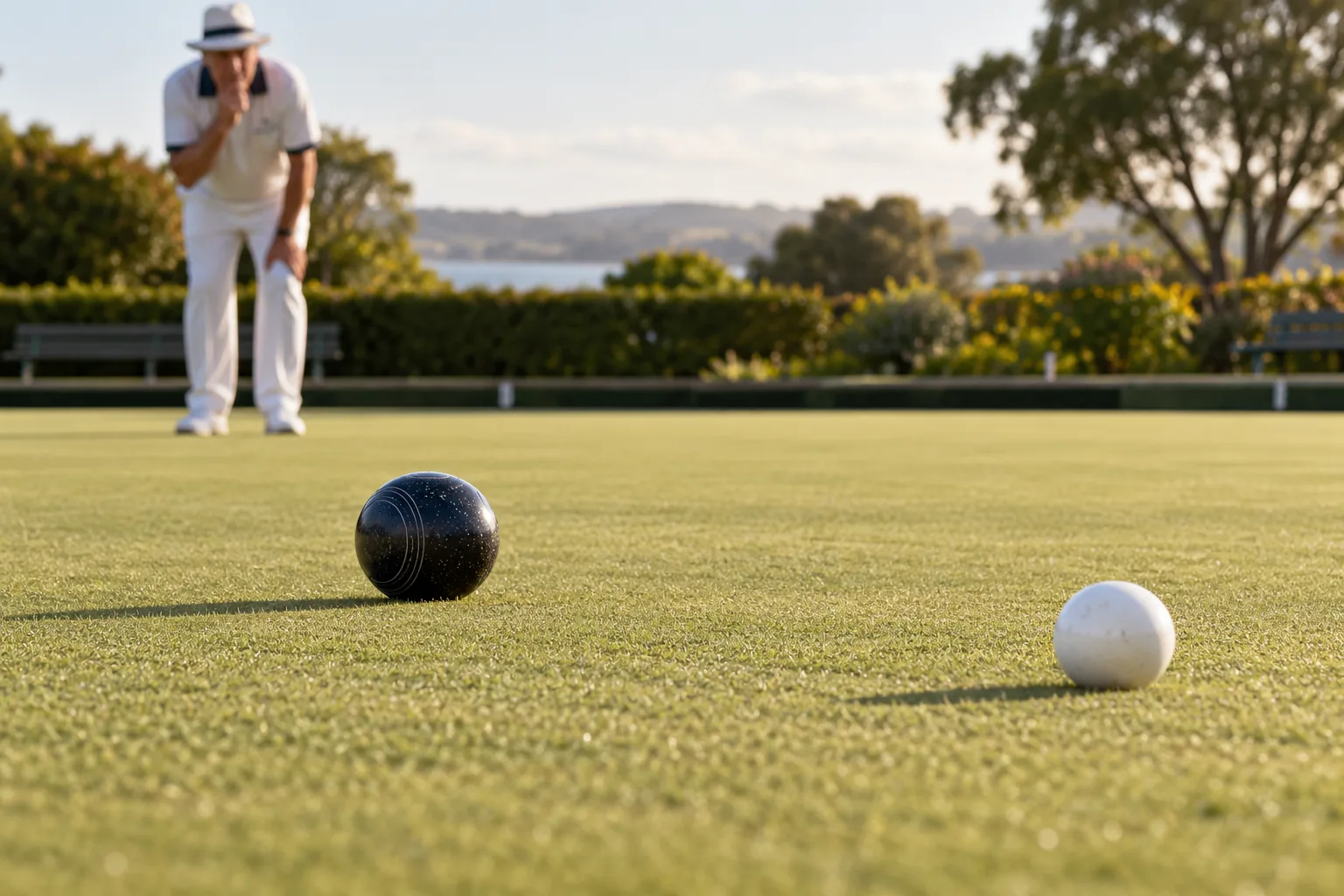
A short bowl can still be useful, but a repeated short miss is a weight-control pattern worth fixing. The answer is usually to gather better feedback, not to force a faster arm swing on every shot.
First, confirm the pattern
Mark where each of six draw bowls stops relative to the jack. Separate bowls that were on line but short from bowls that clipped another bowl or took a different route. Check both directions; wind, green pace and slope can make one end feel different.
Change one cue at a time
Keep the same aiming line and try a slightly fuller, smooth delivery. Think about rolling through the target rather than lunging at it. A rushed backswing can make timing less repeatable. Watch the bowl until it rests and note whether the added weight moved it the distance you expected.
Practise two lengths
Set a legal short jack and a longer jack in separate sequences. Bowl four to each, score how many finish in a one-mat-length zone around the target, then repeat. Alternate lengths only after you can group bowls at each. This tests whether you can intentionally change weight, not merely deliver harder.
Use short bowls tactically
In a match, a bowl in front may block an opponent’s route, but do not call an accidental miss a plan. Ask the skip whether front position helps the head. If the instruction is draw to the jack, use the next bowl to correct the weight with a calm reference to the first.
Sources: Bowls Australia coaching activities, Bowls North West coaching resources.
For a clearer look at a close club head, explore WGTS on iPhone or Android. Follow your competition's official measuring procedure for the result.