
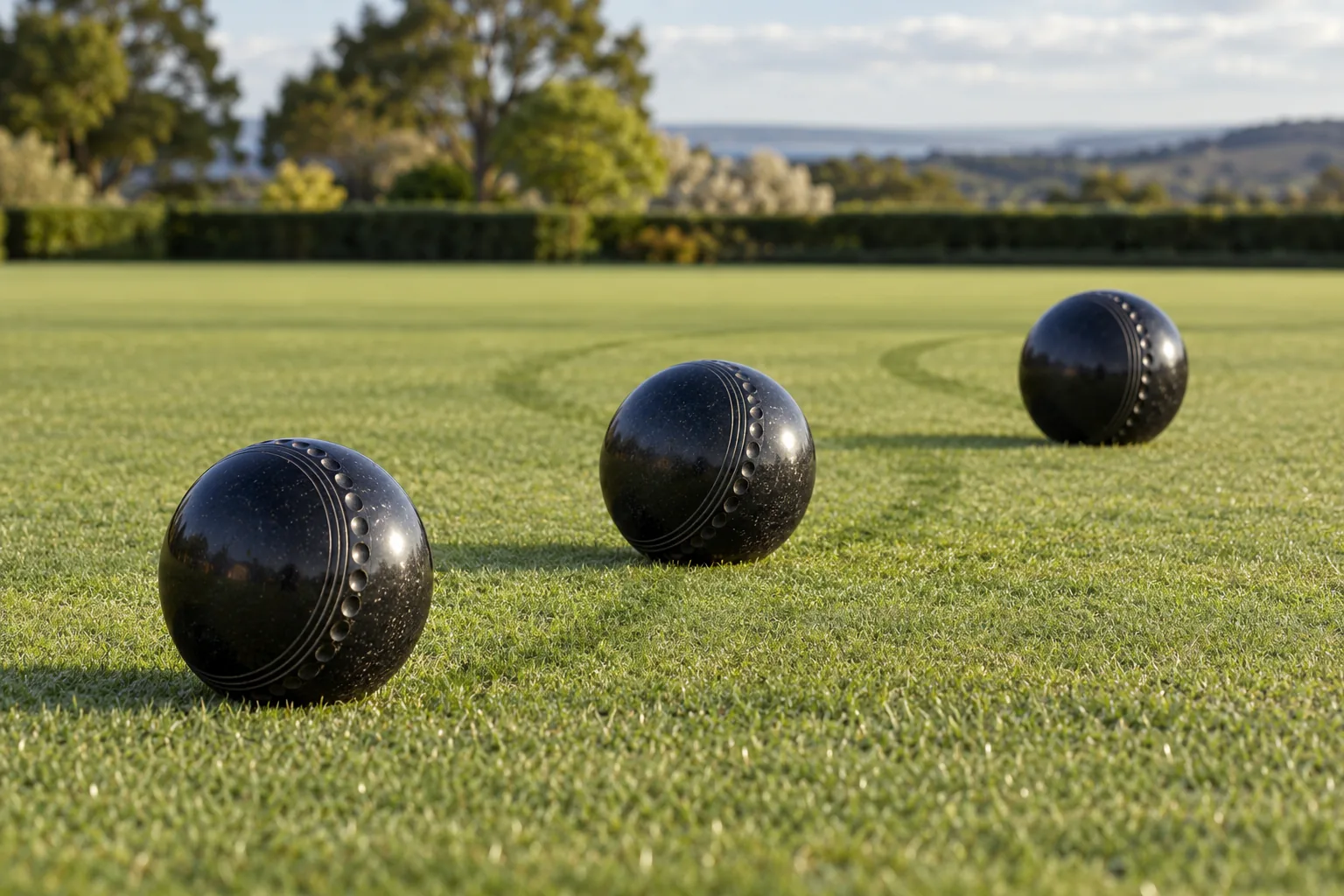
Bowl bias is the curved path that brings a delivered bowl toward its target. Models differ in how much and how late they turn. There is no universally best bias: your green, preferred hand, delivery and comfort all affect the choice.
Start with fit
A bowl you struggle to hold or release is hard to judge fairly. Try a comfortable size and grip first. Then compare bias patterns at the same jack length. Ask the club or retailer to let you test a set on a real green instead of deciding from a catalogue arc alone.
Test both hands and lengths
Deliver several bowls on forehand and backhand at short, medium and long legal jacks. Watch the route as well as the final position. A narrow-running model may fit one indoor surface but give less room around a crowded outdoor head. A wider model may offer a different path but demand more precise line.
Separate bowl path from player error
If your release or weight changes every attempt, you cannot fairly compare two models. Use the same routine, aim at a consistent reference and record the spread of results. Compare what happens on your usual surface, then try an unfamiliar green if possible.
Check competition details
A matching set and a valid stamp matter for sanctioned play. Before buying, verify the current rules and your event conditions, especially for second-hand bowls. A coach can help you interpret a test without selling you a model based on reputation alone.
Sources: World Bowls laws and equipment, Bowls England getting started.
For a clearer look at a close club head, explore WGTS on iPhone or Android. Follow your competition's official measuring procedure for the result.