
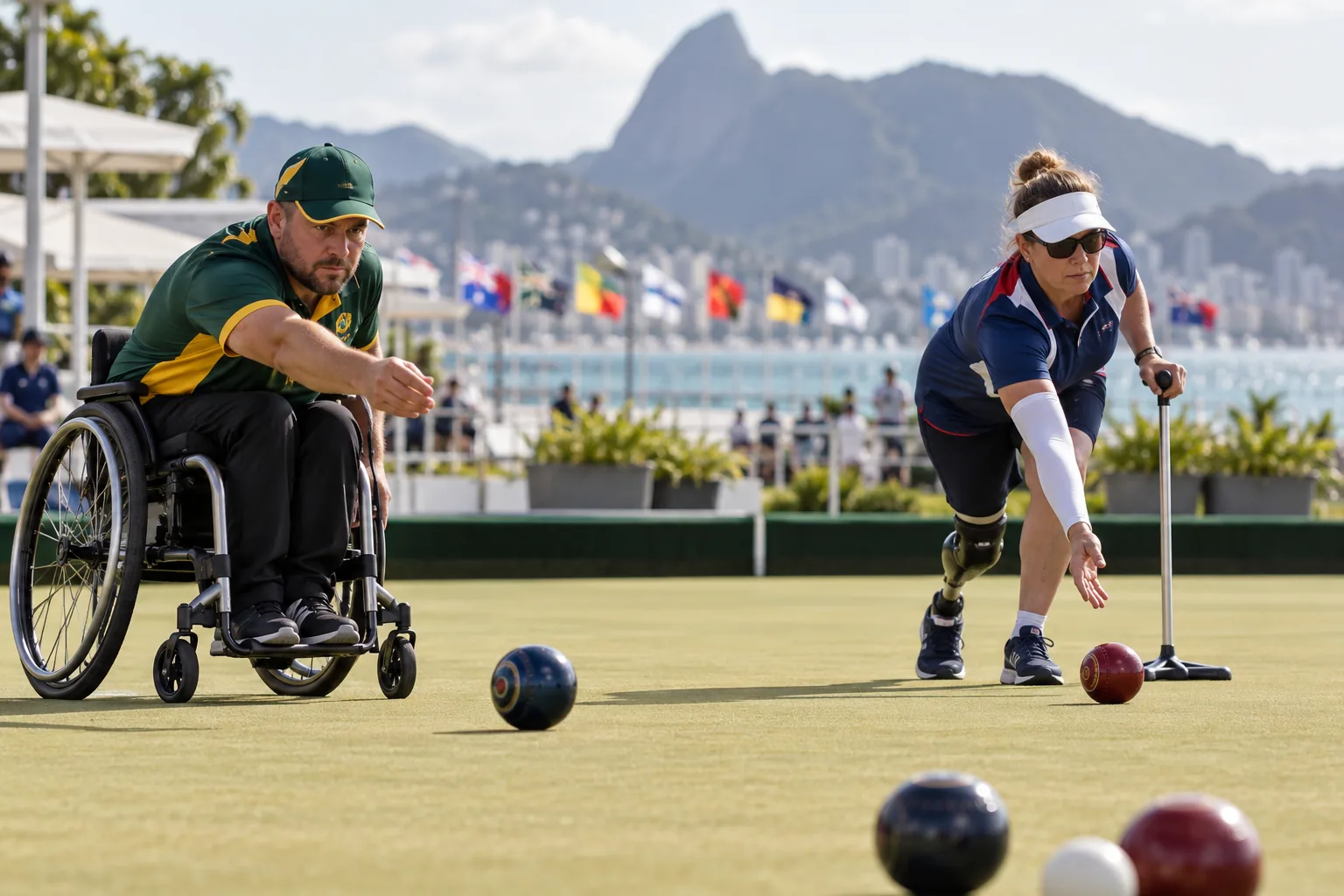
Para bowls was central to the Glasgow 2026 Commonwealth Games programme. Three medal events put different player classes and partnerships on the same international stage. Here are the results and a simple way to follow the format.
Mixed pairs B2/B3
Scotland won the mixed pairs B2/B3 gold in a home final against England. The match went to a tie-break after the teams split the first two sets. Wales took bronze. In this visually impaired category, directors work alongside players; the result reflects the combined communication and execution of the pair.
Women’s and men’s B6-B8 pairs
Australia won both B6-B8 pairs titles on the final day. Louise Hoskins and Serena Bonnell beat New Zealand in the women’s final. Damien Delgado and James Reynolds defeated another New Zealand pair in the men’s final. These results sit alongside the open bowls titles in the overall medal count, rather than being an exhibition.
How to read the classification
The B2/B3 and B6-B8 labels indicate different eligible sport classes. A pair’s combined classification is also limited by the event rules. Classification should never be guessed from how an athlete looks. The official competition documents explain eligibility, and the scoreboard explains who won each set and tie-break.
What clubs can learn
Good accessibility is practical: clear instructions, appropriate equipment, predictable space and enough time for players to communicate. A local club can make a first session easier without pretending every participant needs the same support. Ask players what works for them and follow the governing body’s rules for any competition.
Sources: World Bowls first finals recap, World Bowls final-day recap, para qualification system.
For a clearer look at a close club head, explore WGTS on iPhone or Android. Follow your competition's official measuring procedure for the result.